Pigmentation treatment
Pigment – when your skin becomes unbalanced
Pigmentation spots. Almost everyone knows them and almost no one is happy with them. They often appear gradually, sometimes suddenly, and seem stubbornly persistent. Especially on the face, neck, décolletage, or hands, pigmentation spots can be cosmetically disturbing.
Book an appointment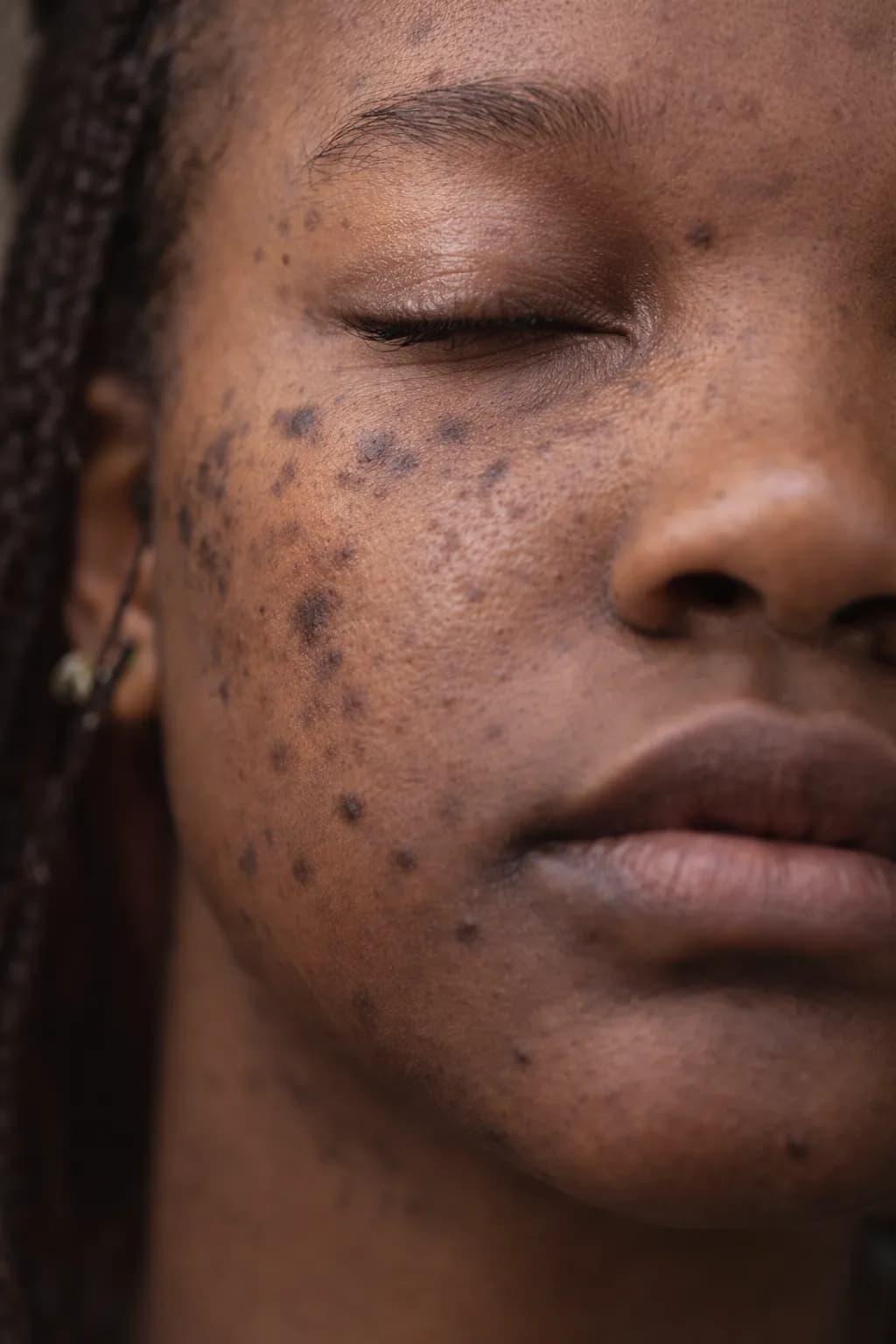
At NovaSkin, we look at pigment differently
We see pigmentation spots not just as a skin problem, but often as a signal of imbalance in both the skin and the body. That's why we work with a holistic and coaching approach, where we not only treat what is visible, but also pay attention to what lies beneath.
Our vision on pigment
Pigment rarely occurs for no reason. Factors such as sun exposure, hormonal fluctuations, stress, inflammation (such as acne), medication, pregnancy, and skin aging often play a combined role. In many cases, more is needed than just a cream or standalone treatment. We believe lasting improvement comes when you gain insight into the cause of your pigment, treat the skin in a targeted way, support internal triggers where possible, and learn how to properly maintain your skin. This requires customization, guidance, and realistic expectations.
What is hyperpigmentation?
The skin contains pigment cells, also called melanocytes. These cells produce melanin, the pigment that gives the skin its color and protects it from UV radiation. When these pigment cells become locally overactive, too much melanin is produced in one spot. This creates dark spots in the skin, which we call hyperpigmentation. We mainly see pigmentation spots on skin areas that are frequently exposed to external influences, such as sunlight and pollution. Particularly on the face, they can be perceived as disturbing and affect how old or tired someone looks.
What does pigment look like?
Pigmentation spots can vary greatly in color, shape, and depth. They can range from light brown to dark brown, but also gray, bluish, or even black. Sometimes there is lighter or white pigment instead. The pigment can be superficial in the skin or located deeper. Usually, pigmentation spots cause no pain or itching, but they can have a significant cosmetic and emotional impact.
Common forms of pigment
There are different forms of hyperpigmentation, each with its own cause and approach.
Sun spots or age spots (Lentigo Solaris)
These are caused by prolonged exposure to UV radiation. They are usually superficial and often respond well to treatment.
Freckles (Ephelides)
Freckles are often hereditary and sun-dependent. They become more visible in summer and lighter in winter.
Post-inflammatory hyperpigmentation
This form occurs after inflammation or damage to the skin, for example from acne, eczema, or wounds.
Melasma (pregnancy mask)
Melasma is hormonal pigmentation and often appears symmetrically on the face. This form requires extra attention and maintenance.
The type of pigment you have largely determines how and how quickly it can be treated.
Our approach to pigment
Treating pigment is always customized. During your first appointment, our skin specialist looks at the type of pigment, the depth of the pigment, possible internal and external triggers, and the condition and resilience of your skin. To map this accurately, we use a skin scan if needed. Based on this, you receive honest and realistic treatment advice.
Chemical peels
Micro needling with the Dermapen 4
Me-Line treatments
These treatments are aimed at regulating melanin production, calming the pigment cells, stimulating skin renewal, and lightening existing pigmentation spots.
Internal support and coaching
With some forms of pigment, particularly hormonal pigmentation, the body plays an ongoing role. In those cases, it's important not only to treat but also to guide. That's why we look at hormonal influences, stress levels, lifestyle and recovery moments, skincare behavior, and sun and exposure behavior where possible. This way, we work together towards the best achievable result and its maintenance.
Maintenance and prevention
Pigment requires consistency. Good home products, tailored to your skin and pigment type, are essential to support results. Additionally, daily sun protection is indispensable. UV radiation is always present, even in winter and on cloudy days. Protection with a high SPF not only helps prevent new pigment but also prevents existing pigmentation spots from worsening.
Realistic expectations, visible improvement
Almost all forms of pigment can be reduced and in some cases even largely disappear. The deeper the pigment, the more time and maintenance is needed. We guide you step by step with honest advice, personal attention, and an approach that suits you. We are always transparent: every ray of sunshine poses a risk of pigment returning. During the intake, we therefore set honest and realistic expectations.
Important tips
Use a high SPF daily, even in winter and on cloudy days
Don't squeeze blemishes to prevent pigmentation
Be consistent with your home care
Discuss hormonal or stress-related triggers with your skin specialist
Be patient: lasting improvement takes time and maintenance
Do you recognize yourself?
Contact us for a no-obligation consultation or schedule an intake directly.
Book an appointment